Back, Knee, or Hip Pain After Hiking? Why Your Body Hurts on the Trail (And How to Fix It)

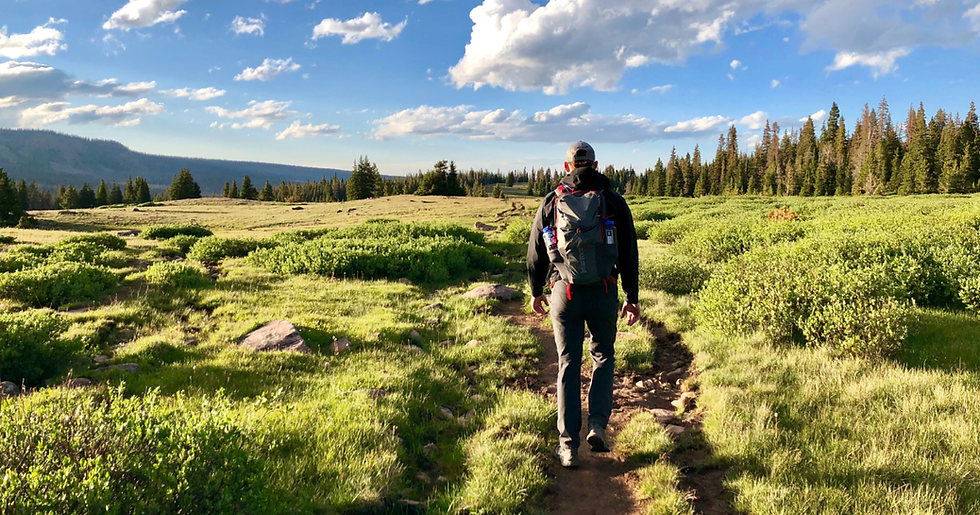
You're a few miles into a hike at Kennesaw Mountain, the Big Creek Greenway, or up in the north Georgia mountains. The views are great, the weather is perfect, and then it starts. A dull ache across your low back. A sharp twinge in the front of your knee on the way down. Hips that feel locked up by the time you reach the car.
Most people write it off as being out of shape, or as a normal price to pay for a long day on the trail.
But plenty of fit, active people get hurt hiking, including runners, lifters, and people who train several days a week. That's the clue. Pain on the trail is rarely about fitness. It's about how your body moves under a specific kind of load, and a hike puts a lot of that load in places a gym session usually doesn't.
Why Hiking Is Harder on Your Body Than It Looks
Hiking seems gentle. It's just walking, right? But look at what the trail actually asks of you:
Uneven ground that forces your ankles, hips, and core to stabilize on every step
Long climbs that demand a lot from your glutes, calves, and hip flexors for hours
Steep descents that load your knees with several times your body weight on every step down
A loaded pack that shifts your center of mass and adds compression through your spine
Time, because a 4 to 6 hour hike is thousands of repetitions of the same movement pattern
If any link in that chain is stiff, weak, or poorly coordinated, the load has to go somewhere. It usually lands on the low back, the knees, or the feet, and that's where you feel it.
The Most Common Hiking Pain (And What's Usually Behind It)
Low Back Pain During or After a Hike
This is the one we see most often. Common drivers include:
Stiff hips. When your hips don't move well on uphill steps, your low back picks up the slack and moves more than it's built to.
Weak glutes. Climbing is a glute job. When the glutes don't do their share, the low back and hamstrings overwork to compensate.
A stiff mid-back. If your thoracic spine doesn't extend and rotate, your low back compensates, and a pack makes it worse.
Pack fit and load. A pack that's too heavy, rides too low, or isn't cinched to your hips pulls you forward and compresses the spine.
Sitting all week, hiking all weekend. Tissue that's been shortened and deconditioned at a desk gets asked to work hard for hours.
Knee Pain, Especially Going Downhill
Downhill hiking is an eccentric load. Your quads and the structures around the knee have to absorb your body weight, plus your pack, as you lower yourself with every step. If your hips and ankles aren't helping control that motion, the knee takes more than its share.
Pain around or behind the kneecap on descents is very common. Pain on the outside of the knee is another frequent one, and it often connects to hip control. If that sounds familiar, our post on IT band syndrome covers it in detail.
Hip Pain and Stiffness
Hours of repetitive stepping, often with limited hip mobility to begin with, can leave you with deep hip ache, pinching at the front of the hip, or a locked-up feeling afterward. Weak glutes and restricted hip rotation are the usual suspects. Our hip pain post goes deeper on that.
Foot and Heel Pain
Long hours on rigid terrain with tight calves and limited ankle mobility can set up plantar fasciitis or Achilles irritation. If your first steps in the morning after a big hike are the painful ones, that's worth paying attention to.
Rolled Ankles
Uneven terrain makes ankle sprains one of the most common acute trail injuries. If you've rolled the same ankle more than once, it likely never fully recovered. We cover that in our ankle sprain post.
Why "Just Rest" and "Just Stretch" Often Don't Fix It
After a hike that leaves you sore, the usual plan is a few days off, some stretching, maybe ibuprofen. The pain fades. Then you go hiking again, and it's back.
That's because rest and stretching address how you feel, not why the tissue was overloaded. In most hikers we see, the real drivers are a combination of:
Restricted hip mobility that pushes load into the back and knees
Glutes that aren't doing enough work on climbs and descents
Limited ankle motion that changes how you absorb each step
A stiff mid-back that limits posture under a pack
Soft tissue restrictions and scar tissue built up from repeated overload
A jump in volume, such as going from short walks to a 10-mile day with no build-up
Unless those are addressed, you're managing symptoms and waiting for the next hike to bring them back.
How to Hike With Less Pain Starting Now
A few simple habits make a real difference:
Warm up for five minutes before you start. Leg swings, bodyweight squats, hip circles, and a few easy steps get your hips and glutes working before the trail does it for you.
Build up gradually. If you're stepping up to bigger days or elevation, add distance over several weeks.
Fit your pack correctly. The weight should ride mostly on your hips, with the hip belt snug and the load close to your back. Keep it as light as you reasonably can.
Use trekking poles on descents. They take meaningful load off the knees, and many people find they help on climbs too.
Shorten your steps downhill. Smaller, controlled steps with slightly bent knees are easier on the joints than big drops.
Train for it during the week. Single-leg strength work such as step-ups, split squats, and glute bridges prepares your body for what the trail demands.
Don't push through pain that sticks around. Normal soreness fades in a day or two. Pain that lingers, or shows up earlier on each hike, is a signal.
What We Do at MVMNT Rehab
At MVMNT Rehab in Alpharetta, we work with a lot of active adults who hike, trail run, and backpack, and we look at how your whole body handles the load rather than just the sore spot.
Movement assessment to find where your body is compensating, whether in the hips, ankles, mid-back, or core
Active Release Technique (ART) to release restricted muscles and tendons that have been overloaded
Graston Technique to address scar tissue and fascial restriction in chronically irritated areas
Joint mobilization to restore motion in stiff hips, ankles, and the mid-back
Strength and stability work built around climbing, descending, and carrying a pack
A plan that fits your trips, whether that's weekend day hikes or a big backpacking trip on the calendar
The goal is simple: fix what's driving the problem so you can keep doing what you love without paying for it afterward.
Signs It's Time to Get Looked At
Back, knee, or hip pain that shows up on most hikes
Aching that lasts more than a couple of days afterward
Pain that starts earlier in the hike each time
You've started avoiding steep descents or longer routes
Poles, braces, or tape help during the hike but nothing changes afterward
The same joint keeps flaring up
If any of those sound familiar, there's a good chance something mechanical is driving it, and it's usually very fixable.
A quick note: sudden severe pain, numbness or weakness in a leg, loss of bladder or bowel control, or pain after a fall should be evaluated by a medical provider promptly.
Ready to Get Back on the Trail Pain-Free?
If hiking has left you with pain that won't go away, we'd love to help you figure out what's going on and build a plan to fix it.
MVMNT Rehab is a performance rehabilitation clinic in Alpharetta, GA, working with active adults across Alpharetta, Johns Creek, Roswell, and Milton who want to keep exploring without their body holding them back.
Book a free discovery visit and let's get you ready for your next trip.
MVMNT Rehab is located inside 1858 Athletic Club at 3365 North Point Pkwy, Alpharetta, GA 30005. Call (404) 863-1876 or email info@mvmntrehab.com.



Comments